Hertha Hurnaus - Haus Meldemannstraße, Czernin Verlag, 2003
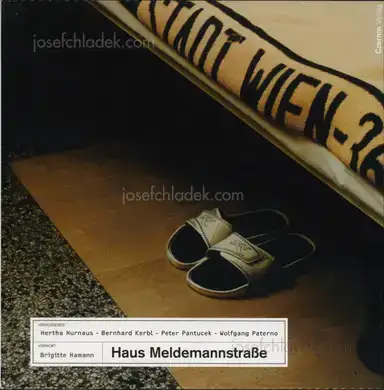
Hertha Hurnaus - Haus Meldemannstraße, josefchladek.com
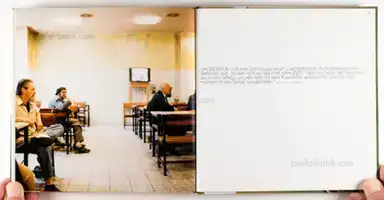
Sample page 1 for book "Hurnaus, Hertha – Hertha Hurnaus - Haus Meldemannstraße", josefchladek.com
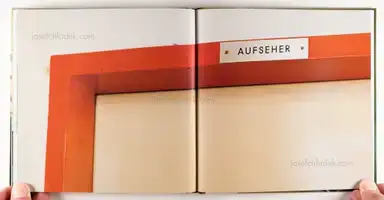
Sample page 2 for book "Hurnaus, Hertha – Hertha Hurnaus - Haus Meldemannstraße", josefchladek.com

Sample page 3 for book "Hurnaus, Hertha – Hertha Hurnaus - Haus Meldemannstraße", josefchladek.com
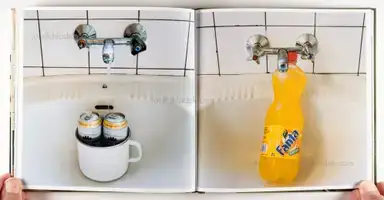
Sample page 4 for book "Hurnaus, Hertha – Hertha Hurnaus - Haus Meldemannstraße", josefchladek.com
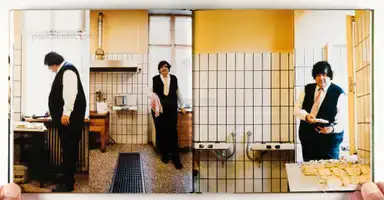
Sample page 5 for book "Hurnaus, Hertha – Hertha Hurnaus - Haus Meldemannstraße", josefchladek.com
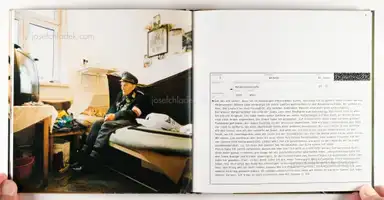
Sample page 6 for book "Hurnaus, Hertha – Hertha Hurnaus - Haus Meldemannstraße", josefchladek.com
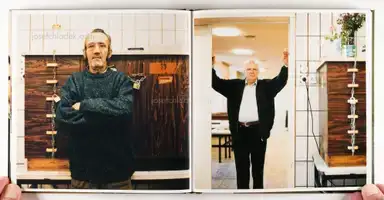
Sample page 7 for book "Hurnaus, Hertha – Hertha Hurnaus - Haus Meldemannstraße", josefchladek.com
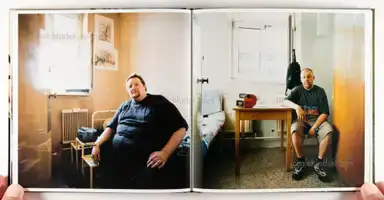
Sample page 8 for book "Hurnaus, Hertha – Hertha Hurnaus - Haus Meldemannstraße", josefchladek.com
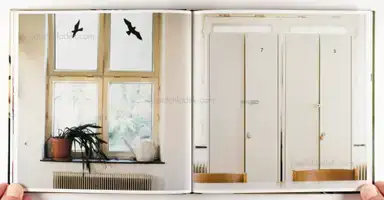
Sample page 9 for book "Hurnaus, Hertha – Hertha Hurnaus - Haus Meldemannstraße", josefchladek.com
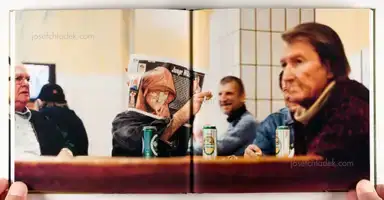
Sample page 10 for book "Hurnaus, Hertha – Hertha Hurnaus - Haus Meldemannstraße", josefchladek.com
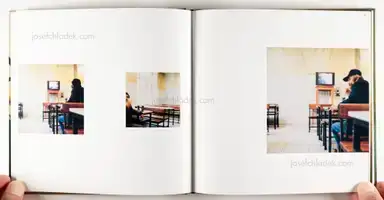
Sample page 11 for book "Hurnaus, Hertha – Hertha Hurnaus - Haus Meldemannstraße", josefchladek.com
Hardcover, original card boards.
In 1905 "die Meldemannstraße" was built as one of the most modern men's hostels. A "wonder of cheapness and elegance" in its early days, it fell into decline over the decades: here "man is made into an animal, exploited to the last and degraded to nothing", as one resident drastically described life in the Meldemannstraße of the 1980s to the writer Gerhard Roth. That tourist buses occasionally stray into the periphery of Vienna's 20th district has less to do with social voyeurism than with the men's shelter's most famous resident: from 1910 to 1913 the then postcard painter Adolf Hitler took quarters here. Before its closure in autumn 2003, the much-awarded photographer Hertha Hurnaus records the atmosphere in the house at Meldemannstraße 27. She portrays people who have found shelter in the three-square-metre cubicles and who tell the journalist Wolfgang Paterno about their lives. Even though whoever ends up here usually stays a long time, the address Meldemannstraße does not mean the end of the line for everyone. In his introductory essay Peter Pantucek places the portrait of the house at Meldemannstraße 27 and its residents in a sociological and social-historical context. Inside and outside views thus merge into a documentation of this institution, long since become legend, that is as sensitive as it is balanced. A foreword by the historian Brigitte Hamann, who analysed "Hitler's Vienna" in detail in her book, rounds off the insight into and the retrospective on the Meldemannstraße men's shelter, which Gerhard Roth, in his "Reise in das Innere von Wien", describes as "one of the bleakest places", "which reflect the revulsion, the disgust and the secret death wishes with which society meets its outsiders".
Artist: Hertha Hurnaus
Pages: 158
Place: Wien
Year: 2003
Publisher: Czernin Verlag
Size: 21 × 22 cm (approx.)
Other books by Czernin Verlag (see all)

Other books tagged Homeless (see all)


Other books tagged Home (see all)


Other books tagged Vienna (see all)


Latest updates